Current Projects
Rotoehu Ecological Trust undertakes a range of conservation projects in Rotoehu Forest, working alongside mana whenua, conservation partners, funders and the wider community.
2027 Kōkako Census
In autumn 2027, Rotoehu Ecological Trust will undertake the next major census of North Island kōkako across Rotoehu Forest and surrounding areas. Conducted approximately every five years, the census provides an important measure of changes in the kōkako population and helps guide future predator control, habitat management and conservation priorities.
The proposed survey will cover up to 3,700 hectares, including areas receiving ongoing predator control as well as adjoining kōkako habitat. Experienced surveyors will systematically search for kōkako, identify territorial pairs and map their locations, allowing the results to be compared with previous surveys and providing an updated picture of the population and its distribution.
The census is a significant undertaking, with a current estimated cost of around $70,000. Funding will determine the final area surveyed, with priority given to areas where the results will provide the greatest value for future management. Planning and fundraising are already underway ahead of fieldwork in autumn 2027.
Our previous census results can be viewed on our results page.
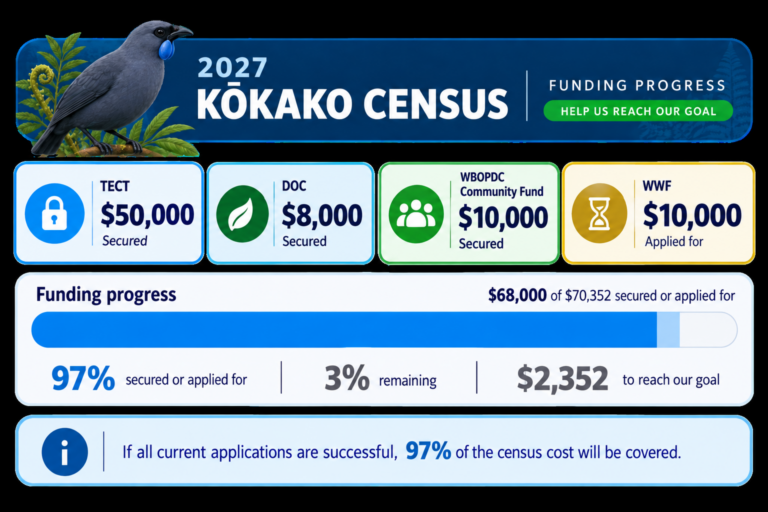
Created with AI so that our funding can stretch further
Tītitipounamu Nest Box Project
Tītitipounamu (rifleman) are Aotearoa’s smallest native bird and are present within Rotoehu Forest. We are trialling purpose-built nest boxes to provide additional nesting opportunities and learn more about how tītitipounamu are using the forest. Boxes are being installed at selected locations and will be monitored over time to determine whether they are being used for nesting. The project also provides an opportunity to involve volunteers and young people in practical conservation while building our knowledge of species other than kōkako within Rotoehu.
The map below shows the locations of nest boxes installed and monitored as part of the project
RF3c and RF4 Expansion
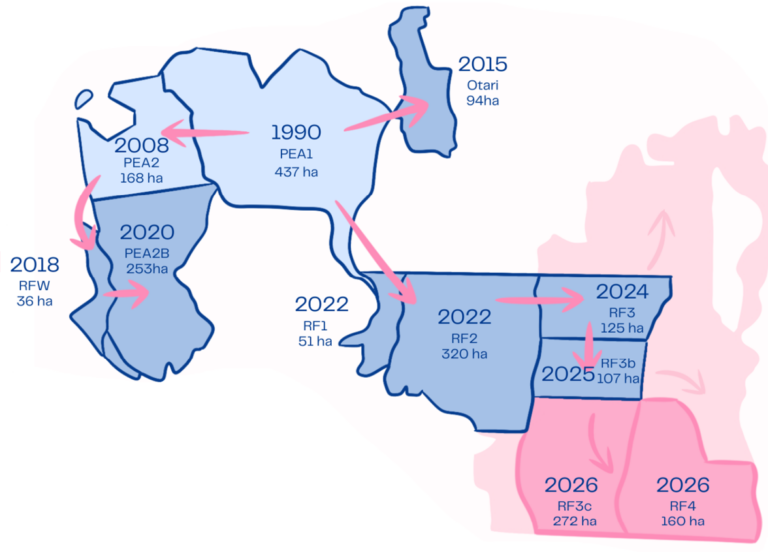
The expansion into RF3c and RF4 forms part of a long-term programme to increase the area of Rotoehu Forest receiving sustained predator control. New tracks and bait-station networks extend protection into additional areas of suitable kōkako habitat and strengthen connections between previously managed areas. RF4 also contributes towards the wider goal of improving the ecological connection towards neighbouring conservation work at Manawahe. This represents the final major phase of the Trust’s currently planned expansion, allowing the focus to increasingly shift from establishing new infrastructure to maintaining and strengthening the network already in place.
Adapting Bait Stations for Weka
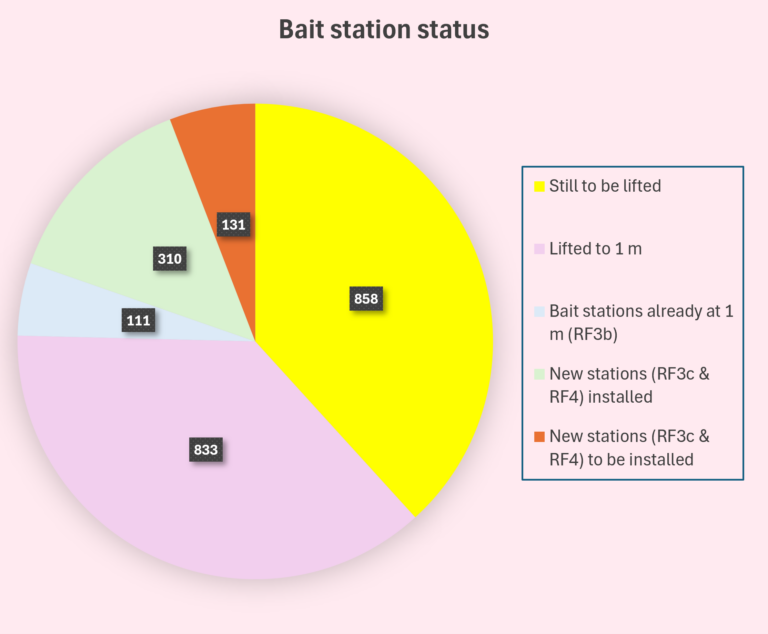
The return of North Island weka to Rotoehu Forest has required us to adapt parts of our predator-control programme. One of the largest projects underway is raising existing bait stations to approximately one metre above the ground to reduce the likelihood of weka accessing toxic bait. More than 1,700 existing stations require lifting across the network, while newer stations are being installed at the increased height from the outset. The work is a significant undertaking, but will allow effective rat and possum control to continue while reducing risks to this returning native species.